Is Providence, RI a Good Place to Live? A Neighborhood-by-Neighborhood Guide
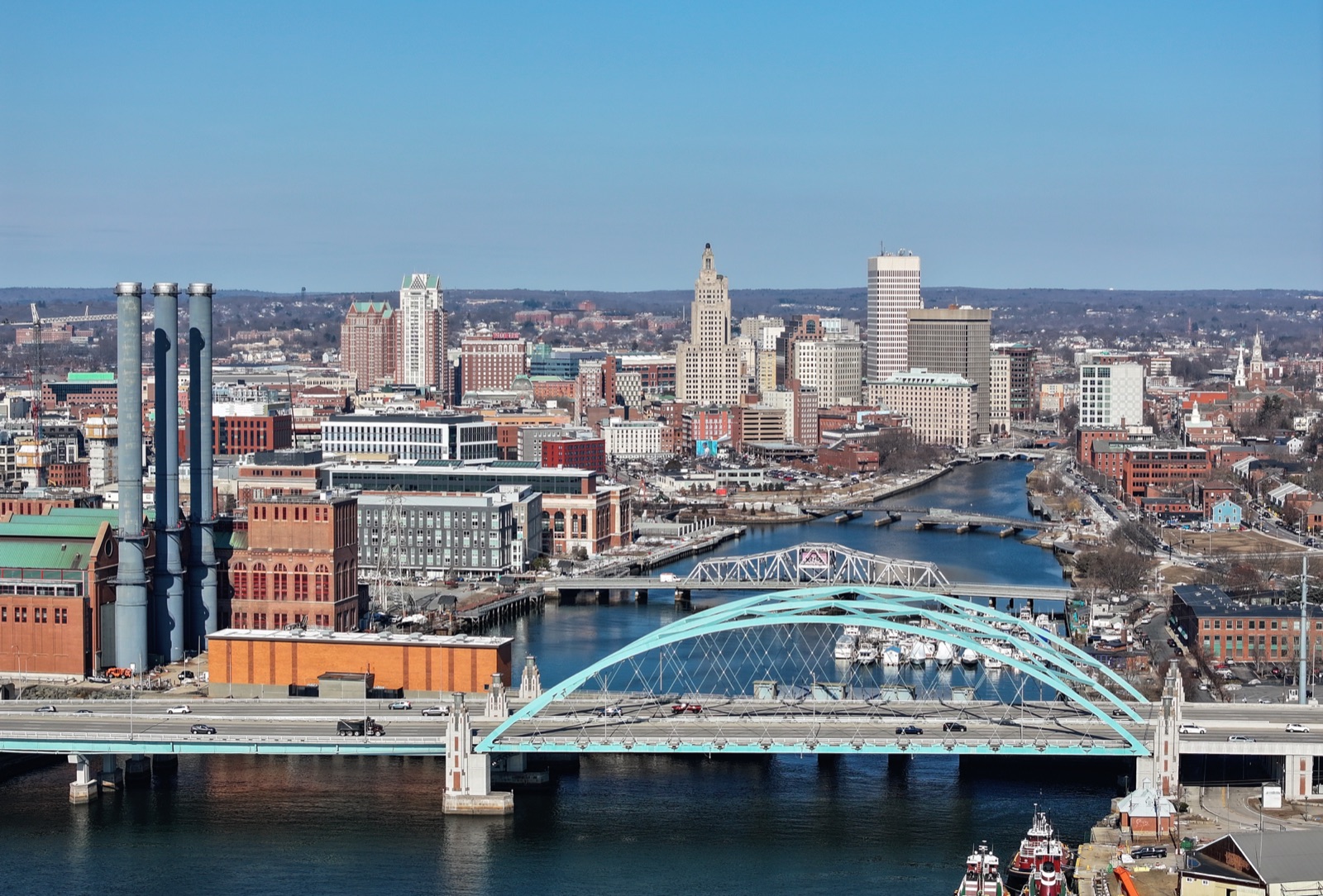
Yes, Providence is a good place to live, for the right buyer, and with some tradeoffs you should understand before you sign anything. I say that as someone who sells here every week, not as a booster. Providence gives you a real city (walkable, food-obsessed, culturally dense) at a price that is still well below Boston, roughly an hour up I-95. In exchange you accept older housing stock, property taxes that vary a lot by situation, and schools that are genuinely uneven from one neighborhood to the next.
I am David Peterson, a Fathom Realty agent licensed in Rhode Island and Southeastern Massachusetts. I also run a digital marketing agency, so I spend my days looking at data, and I try to bring that same honesty to real estate. Below is my neighborhood-by-neighborhood take. Every price and tax figure here is a general 2026 range meant to orient you, not a quote. Always verify current figures before you make a decision, because this market moves.
The short version: who Providence is right for
Providence tends to work well if you want walkability and character, if you value being close to Brown, RISD, and a serious restaurant scene, and if a commute to Boston (by train or car) is occasional rather than daily. It works less well if you need brand-new construction, a large flat yard, or you want to avoid the homework that comes with buying a 100-year-old house.
The city is small (about 190,000 people) but it punches above its weight culturally. You are also 35 to 45 minutes from the beaches in the southern part of the state, which is a quality-of-life detail people underrate until they live here.
Culture: RISD, Brown, and a food scene that is not hype
The Rhode Island School of Design and Brown University sit side by side on the East Side, and their presence shapes the whole city. You get gallery nights, a strong independent arts community, and a steady stream of talks, shows, and public events. WaterFire, the downtown installation where braziers are lit along the rivers on select nights, still draws big crowds in the warm months.
The food scene is the real deal, not marketing. Federal Hill is the historic Italian district and remains one of the best concentrated restaurant strips in New England. Beyond that, Providence has quietly become a serious dining town across cuisines, helped by Johnson and Wales culinary graduates who stay in the area.
Commute: the Boston question
This is the number one thing out-of-state buyers ask me. The honest answer: the MBTA Commuter Rail runs from Providence Station to Boston in roughly 60 to 70 minutes each way. Driving I-95 can be similar off-peak and noticeably worse at rush hour. Plenty of people do the daily Boston commute from here, but I would not call it easy five days a week. If you are hybrid (two or three days in Boston), Providence becomes a very compelling value play. Within the city itself, most errands are a short drive, and the walkable neighborhoods genuinely let you leave the car parked.
Schools: be specific, not general
I will not tell you Providence schools are uniformly good or uniformly bad, because neither is true. The Providence Public School District has struggled and is under a state-involved improvement effort. Outcomes vary meaningfully by neighborhood and by individual school. Many East Side families use strong public options, magnet and charter schools, or private and parochial schools. If schools are your top priority, do not buy on the city name alone. Look up the specific assigned schools for the specific address, check current ratings, and if needed weigh nearby districts. This is exactly the kind of address-level homework I do with clients before they fall in love with a house.
Safety: honest, by area
Providence is a city, and like any city it has safer pockets and rougher ones, sometimes only a few blocks apart. Broadly, the East Side neighborhoods (College Hill, Blackstone, Wayland Square) are among the most settled and low-incident areas. Elmhurst and parts of Mount Pleasant are stable residential areas. Parts of the West End and pockets on the south and west sides have historically seen more property and violent crime, though the West End in particular has been gentrifying fast and block-by-block variation is real. My advice is always the same: judge the block, not the reputation, and visit at different times of day. Check current local crime data yourself before deciding, because these patterns shift.
Neighborhood by neighborhood, with price ranges
These are general 2026 single-family ranges to help you calibrate. Condos, multi-families, and specific streets vary widely. Verify current listings before you anchor on any number.
**East Side (College Hill, Blackstone, Wayland Square).** This is the prestige quarter, home to Brown and RISD, with historic homes, tree-lined streets, and the walkable shops and cafes of Wayland Square. It is the most expensive part of the city. Expect many single-family homes in the roughly 600,000 to well over 1,000,000 range, with the grandest historic houses going higher. You are buying character, walkability, and the best-regarded public school options in the city.
**Federal Hill.** The Italian heart of Providence and a dining destination, right next to downtown. Housing is a mix of multi-families, condos, and smaller single-families. It is a great fit if you want restaurants at your doorstep and a lively, urban feel. Single-family pricing often runs in the mid 300,000s to 600,000s depending on condition and exact location.
**Elmhurst.** A stable, residential, family-oriented neighborhood on the north side, home to Providence College. You get more actual single-family houses with yards than in the denser core. Pricing commonly falls in the roughly 350,000 to 600,000 range. A solid pick for buyers who want neighborhood feel without East Side prices.
**Mount Pleasant.** Adjacent to Elmhurst, similar in character, generally a bit more affordable. Good for buyers looking for a starter single-family or a multi-family to house-hack. Ranges often sit in the low 300,000s to low 500,000s.
**West End.** One of the city's most dynamic areas, close to downtown and Federal Hill, with beautiful older housing stock and a fast-changing character. It rewards buyers who do their homework block by block, because value and condition swing hard from street to street. You can find single-families and multi-families across a wide band, often from the high 200,000s into the 500,000s and up on the best-restored blocks.
**Fox Point.** A charming, walkable neighborhood on the East Side's edge near the water and the hurricane barrier, with Portuguese heritage and easy access to Wickenden Street's shops and restaurants. It is desirable and priced accordingly, frequently in the 500,000s and up.
**Downtown and the Jewelry District.** This is the urban-condo and loft side of Providence, walkable to the train station, the river, and the growing life-sciences and university presence in the Jewelry District. If you want low-maintenance city living rather than a house and yard, this is your lane. Condo pricing varies widely by building and size, so treat it as its own analysis.
The tradeoffs to price in
A few things I make sure every buyer understands:
- **Property taxes.** Rhode Island property taxes are not the lowest in the country, and Providence has its own rate structure with different treatment for owner-occupied versus non-owner-occupied and multi-family properties. Do not estimate. Get the actual tax figure for the actual property, and confirm the current rate and any owner-occupied exemption before you buy.
- **Older housing stock.** Much of the city was built long ago. That means charm, and it also means knob-and-tube questions, older systems, lead paint disclosures, and inspection findings. Budget for it and inspect thoroughly.
- **Parking and density.** In the walkable core, off-street parking is a real amenity and worth confirming.
My honest summary: Providence is a good place to live for buyers who want genuine city life, culture, and food at a price below Boston, and who are willing to do address-level homework on schools, taxes, and the specific house. It is not the right fit for someone who needs new construction, big lots, or a friction-free daily Boston commute.
Let's find your block
The right answer to "is Providence a good place to live" is almost always "which part, and for whom." That is the conversation I have with clients every week, matching the neighborhood to your budget, your commute, and your priorities, with real current numbers instead of ranges.
If you want to go deeper on the city, start with [the Providence market page](/areas/providence-ri) for a fuller local breakdown. When you are ready to talk specifics, [book a consultation](/contact) and we will map your search block by block. Already own here and curious what your place is worth in today's market? Get a quick [home valuation](/home-valuation) to start.

Written by
David Peterson
David is a real estate agent with Fathom Realty, dual-licensed in Rhode Island (RES.0047177) and Massachusetts (9577507-RE-S). He serves the Providence metro, the East Bay and coastal Rhode Island, and Southeastern Massachusetts, and brings a digital marketing agency background to every listing.
Need a strategy tailored for your family?
As a dual-licensed professional working on both sides of the line, I'll build custom financial models, tax maps, and school evaluations specifically for your objectives.
Calculate Your Home's True Comparative Value